

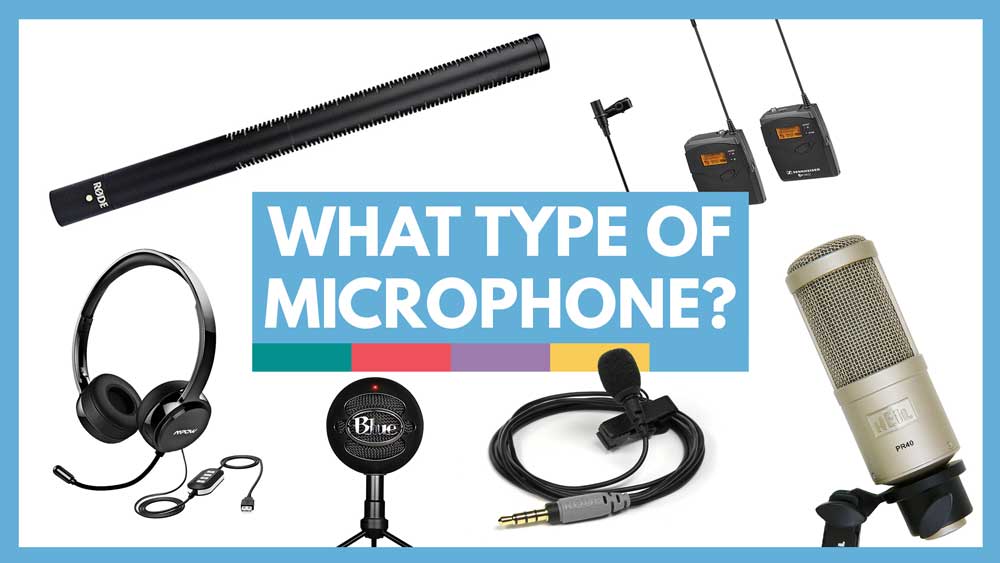
The most common microphones used in video production fall into four main categories: Shotgun mics for directional off-camera recording, Lavalier mics for discreet on-person miking, Handheld mics for interviews, and Studio/Built-in mics for voice-overs and vlogging. Choosing the right type depends on your recording environment, subject distance, and framing constraints.
1. Shotgun Microphones
- How it works: A highly directional microphone with an interference tube that rejects background noise from the sides and rear while focusing on the subject.
- Best used for: Filmmaking, documentaries, and interviews. They are typically mounted on a Boom Pole just outside the camera frame or attached directly to the camera’s hot-shoe.
- Industry Standard: Sennheiser MKH 416.
2. Lavalier Microphones
- How it works: Often referred to as “lavs” or lapel mics, these are tiny, omnidirectional microphones that clip discreetly onto a subject’s collar or tie. They are usually wired to a belt-pack transmitter or act as stand-alone wireless units.
- Best used for: Presenters, unscripted interviews, and dynamic scenes where the speaker is moving around.
- Industry Standard: Rode Wireless PRO or Sennheiser EW-DP.
3. Handheld Microphones
- How it works: Dynamic microphones that you hold in your hand. They have a more forgiving polar pattern and a short working distance, making them highly effective at isolating a voice in loud, chaotic environments.
- Best used for: News reporting, street interviews, and “man-on-the-street” segments.
- Industry Standard: Shure SM58.
4. Studio & USB Microphones
- How it works: Large-diaphragm condenser microphones that sit on a desk or stand in front of the subject. They require a quiet acoustic environment due to their high sensitivity to sound detail.
- Best used for: Voice-over narration, podcasts, YouTube a-roll talking heads, and video conferencing.
- Industry Standard: Shure SM7B or Blue Yeti.
5. On-Camera / Vlogging Microphones
- How it works: Miniaturized shotgun or condenser mics that plug directly into a DSLR, mirrorless camera, or smartphone. They are lightweight and usually rely on “plug-in” power from the camera itself.
- Best used for: Vlogs, travel videos, and run-and-gun filmmaking where a boom operator is unavailable.
- Industry Standard: Rode VideoMic Pro.